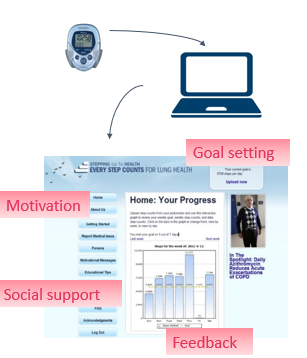
Examples: - using goal setting and feedback off devices
- Omron (Moy et al)
- Fitbug (Demeyer et al)
- PD724 Triaxial Tanita (Mendoza et al)
- Fitbit (wrist / belt)
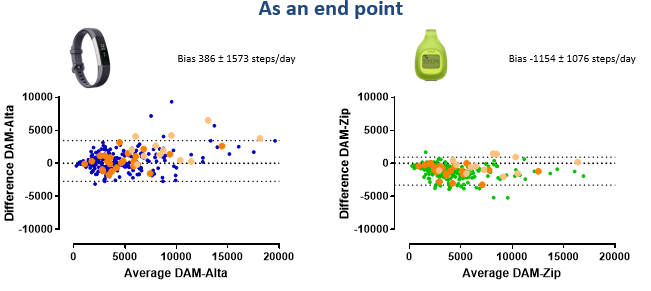
- Not accurate enough for clinical study purposes
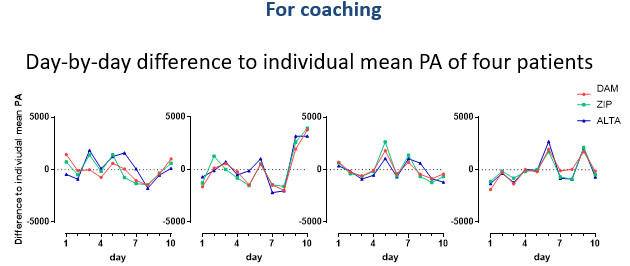
- Valid enough for coaching purposes
- Wrist worn: overestimation / underestimation
- Waist worn: underestimation
Proposed algorithm for 'goal setting'
- <6000 steps - Increase by 3000 steps
-
6000 steps <9000 steps - Reach 9000 steps
-
9000 steps - Maintain or increase
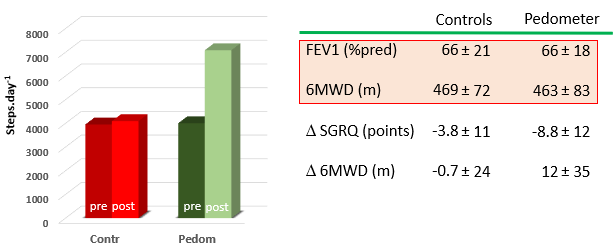
- with advise from the pedometers - easier to provide increases that are meaningful to patient
- increases PA levels but not always increases fitness levels
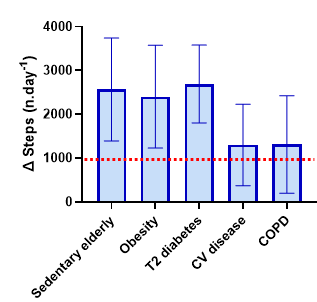
- increases PA levels but not always increases fitness levels
- In many chronic conditions, consumer based wearables can help to improve physical activity
Technology can help
- Consumer market (no third party interface)
- Consumer market (with coach interface)
- Medical market (with HCP interface)
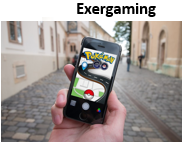
- Playing Pokémon Go was associated with a statistically significant but clinically modest increase in the number of daily steps taken among game players. One challenge for future physical activity interventions using Pokémon Go is to retain active engagement once the initial novelty wears off.
Computer based platforms