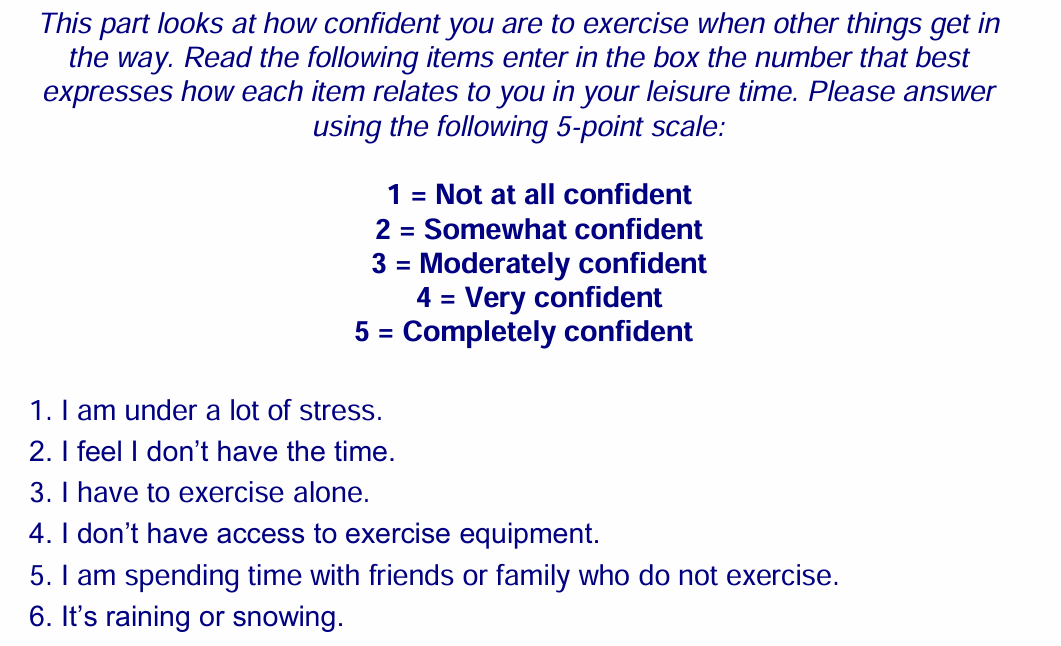
The (situation- and behaviour-specific) confidence that you can be active even when you encounter challenging barriers
E.g. I am confident I can be active when I feel I do not have much time
Different from self-confidence
It is not about the ability to do something, but the ability to carry on if a problem arises
Self-efficacy for PA questionnaire
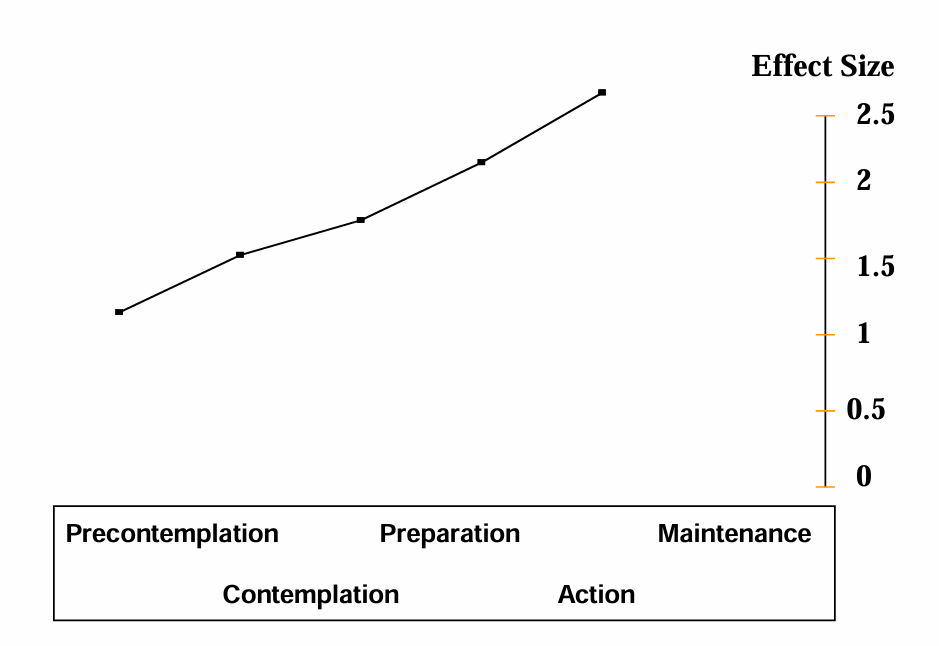
Differences in self-efficiacy across stages:
How to help our client move through the stages?
Determine in which stage they are (with respect to problem behaviour)
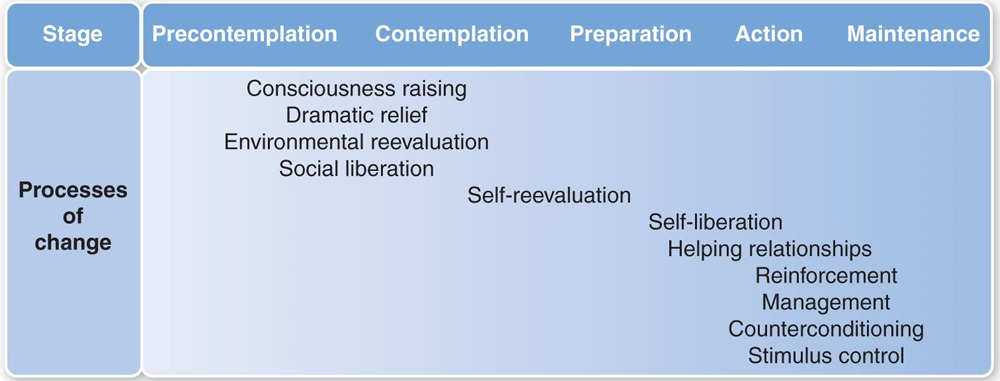
Stimulate processes relevant to stage: cognitive in the first stages, behavioural in later stages
TTM strengths
TTM as a dynamic model provides an important advance on static linear models of exercise and physical activity determinants by hypothesising both the ‘how’ and ‘when’ of behaviour change
Meta-analytic evidence broadly supports the model, although the classification of processes of change into two higher-order categories (cognitive/behavioral) is questioned
It has intuitive appeal (classification of clients and type-specific strategies) and has been adopted by the field
TTM critiques
The majority of study designs are cross-sectional: more longitudinal research required)
There is a need to standardize and improve the reliability of measurement of stages and related constructs
Stage-by-process interactions are not evident (except consciousness raising in precontemplation)
TTM can be used as a general tool (concepts are meaningful) but the specific instructions (e.g., use that process in that stage) seem less relevant. If necessary, you can use all processes in each stage (depending on the specific situation/client).