Why consult?
- Ask the patient why he/she comes to see you
- Expectations and goals
- Knowledge
- Motivation
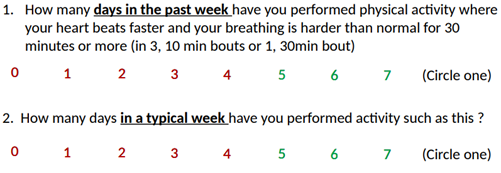
- Current PA/PF (top level)
-
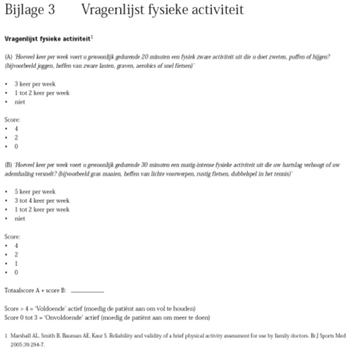
Documentation of PA in clinical practice
- Physical Activity Vital Sign Questionnaire
- Speedy Nutrition and Physical Activity Assessment (SNAP) Questionnaire
-
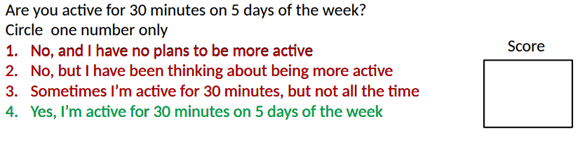
- Examples of activities are:
- Walking
- Household work
- Work in the yard or garden
- Dancing
- Jobs that require walking, lifting, or other hard work
- Exercise
- Physical activity short questionnaires
- Correlation with objectively assessed PA is modest/poor
- Good identification of inactive patients
- Less accurate to identify active patient
- Simple quick screening
- When PA as Vital sign is assessed, better counselling and advice around PA is provided
- Centers with EVS assessment 12% more progress notes and 14% more referrals for PA, although values for referral are generally too low
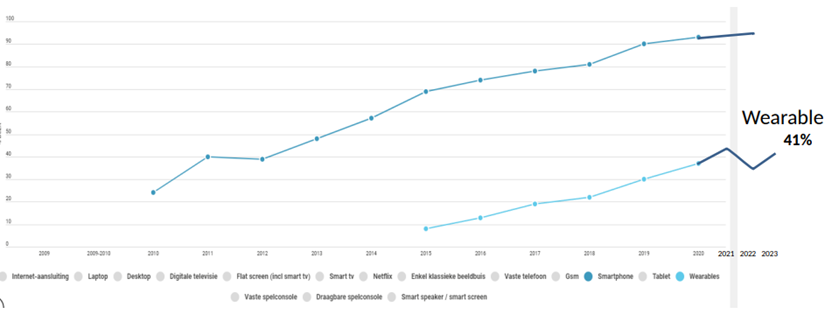
- ‘activity’ trackers
-
- Problem:
- Inconsistency and overestimation
- Be critical of wearable data
- Make sure you understand the technology and its limitations
Medical Problems
- CV/respiratory/metabolic/neurologic/muscular
- Contra-indications for exercise (-testing)
- Absolute:
- Acute myocardial infarction (MI), within 2 days
- Ongoing unstable angina
- Uncontrolled cardiac arrhythmia with hemodynamic compromise
- Active endocarditis
- Symptomatic severe aortic stenosis
- Decompensated heart failure
- Acute pulmonary embolism, pulmonary infarction, or deep vein thrombosis
- Acute myocarditis or pericarditis
- Acute aortic dissection
- Physical disability that precludes safe and adequate testing
- Relative contraindications
- Known obstructive left main coronary artery stenosis
- Moderate to severe aortic stenosis with uncertain relation to symptoms
- Tachyarrhythmias with uncontrolled ventricular rates
- Acquired advanced or complete heart block
- Hypertrophic obstructive cardiomyopathy with severe resting gradient
- Recent stroke or transient ischemic attack
- Mental impairment with limited ability to cooperate
- Resting hypertension with systolic or diastolic blood pressures >200/110mmHg
- Uncorrected medical conditions
- Significant anaemia
- Important electrolyte imbalance
- Hyperthyroidism
- CAVE: undiagnosed chronic disease with impact on exercise!
- Also look at risk profiles (smoking/obesity/hidden complaints/etc.)
- Document actual medication (and look up its pharmacologic action)
Exercise Symptoms
- Pain?
- Shortness of breath?
- Weakness/fatigue/exhaustion
- Dizziness, fainting
Past Experiences with exercises
- Positive experience?
- Injuries or negative experience?
Any Specific Circumstances
- Prosthetics
- Medications
- Etc...
Powered by Forestry.md