When setting a SMART goal, you’re identifying something in the future you want to achieve (“I want to be able to walk 10,000 steps every day”).
Pursuing SMART goals is about reducing the gap between where you are now and where you want to get to. This means that you’re always lagging behind where you want to be.
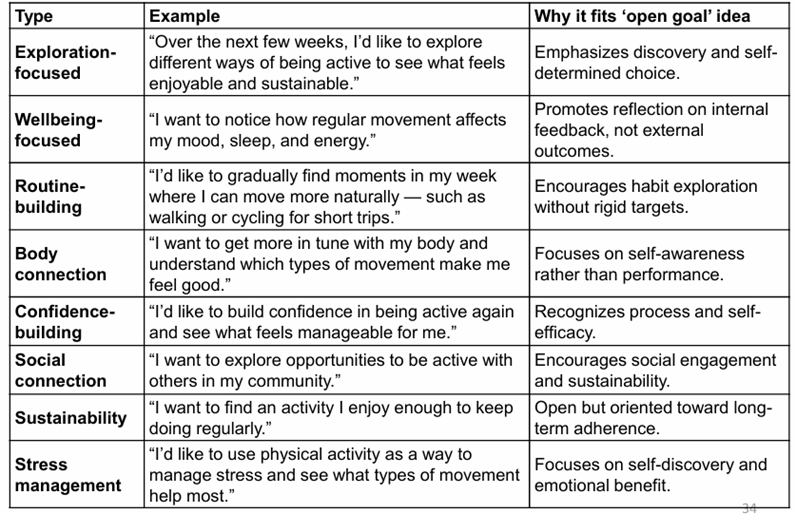
When you set an open goal, your focus is on your starting point. There is no gap between the now and the desired because from the moment the patient starts doing the PA, they are already in the goal which is essentially exploring
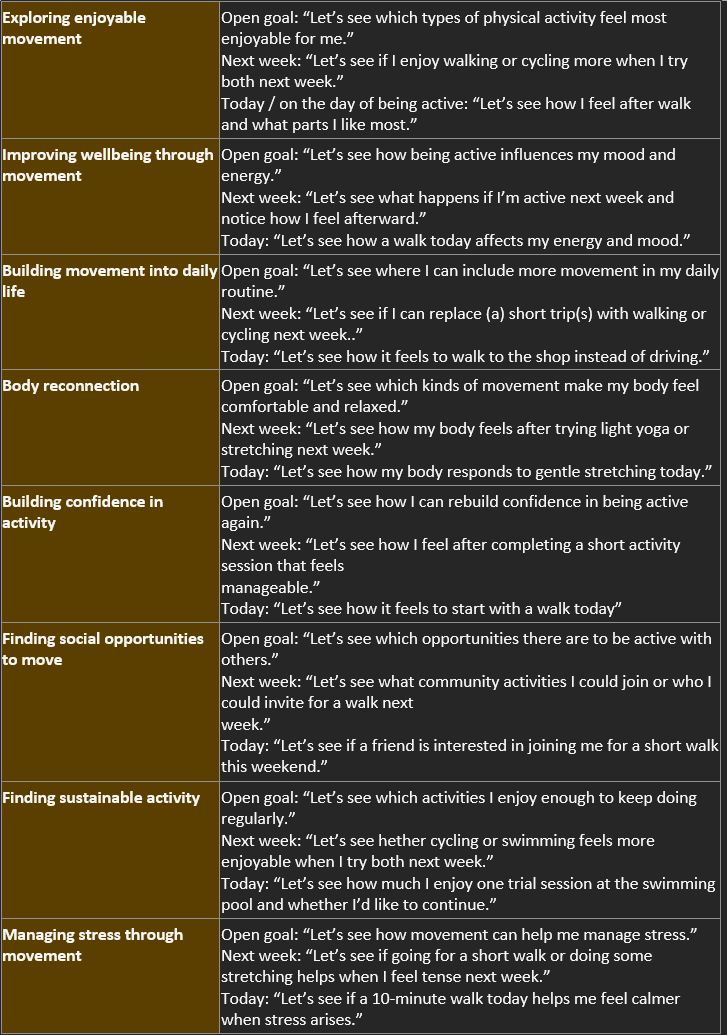
If your goal is to “see how many steps I can reach today”, then as your step count rises, it will feel like you’re making progress. You may start to think, “Oh, I’m already on 2,000 steps… Now it’s 3,000 steps… Let’s see how many I can get to.”
Rather than comparing against where you should be, you’re constantly building on your starting point.
Open goals make the process much more positive. The more positive patients feel during physical activity, the more they want to do it again and again.
Open goals focus on:
Exploring what PA means to the patient
The learning process in the beginning: Explore different ways / how many steps can I achieve?
Focus on barriers and overcoming challenges ("Assist")