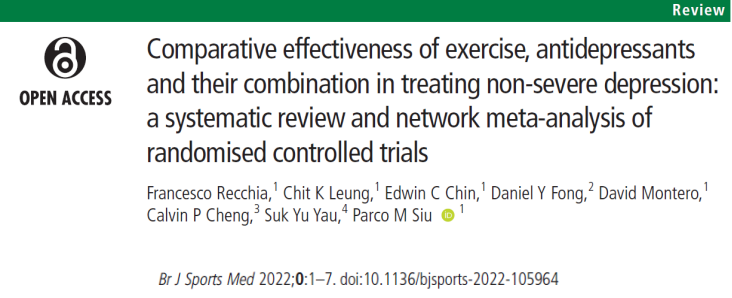
There is no significant difference in effectiveness between exercise, antidepressants or their combination
All interventions are equally effective
Antidepressants are, however, more accepted
drop-out from exercise is higher in short-term follow-up studies
odds 1.40
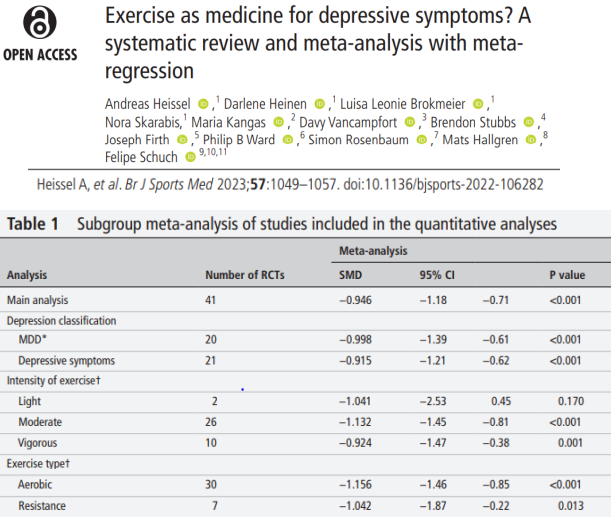
Exercise is beneficial in reducing mild, moderate and severe depression
Exercise should be at least moderate in intensity. However, for motivational reasons starting with light intensity and progressing towards moderate intensity is ok.
Both aerobic and resistance training are beneficial: offer choices.
Primary care.
Known major depressive or anxiety disorder but no medication in the past 2 weeks and not more than once per week exercising.
No acute suicidal ideation and no other acute psychiatric disorders needing treatment such as substance use disorder.
No contra-indications for exercise.
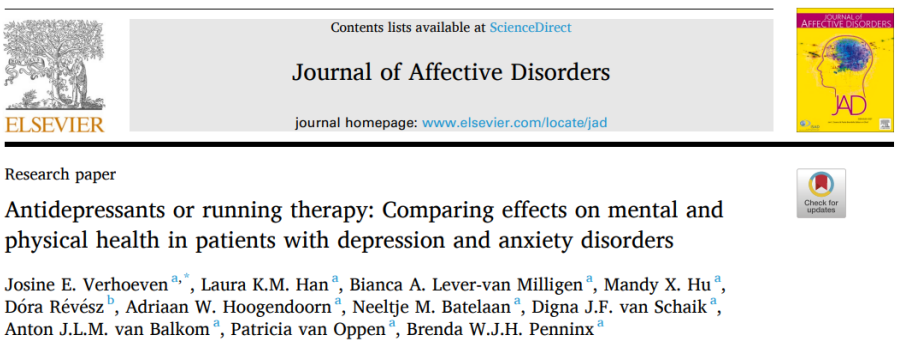
After 16 weeks of either antidepressants or 2 times per week running: no significant difference in remission rates, i.e. 44.8% following antidepressants vs. 43.3% following running.
Adherence better with antidepressants!
After 16 weeks only significant improvements in the metabolic risk profile following running and not following antidepressants.
Aerobic exercise has the most significant effect on depressive symptoms, followed by aerobic combined with resistance exercise.
30 min of exercise per day is sufficient.
At least 12 weeks of exercising is recommended.
Twice or 3 times per week exercising is sufficient.