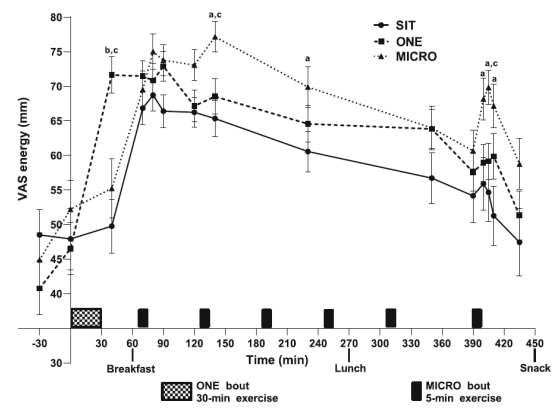
- Interventions interrupting sedentary behaviour improve self-perceived energy levels over the day and vigour at the end of the day, compared to uninterrupted sitting.
- The multiple short bouts of activity improved mood throughout the day and reduced feelings of fatigue in the late afternoon even more.
- Microbouts of activity led to sustained effects along the day, while the effects of the single bout of activity performed early in the morning did not last throughout the day.
- Based on the findings of this study, occupational health initiatives may want to introduce physically active breaks during the workday routine, as they are likely to increase workers’ well-being and energy.
- Future studies are needed to confirm the efficacy of this intervention with large-scale, randomized, controlled trials assessing activity interventions in office environments and their effects on long-term productivity, cognitive performance, wellbeing and health outcomes
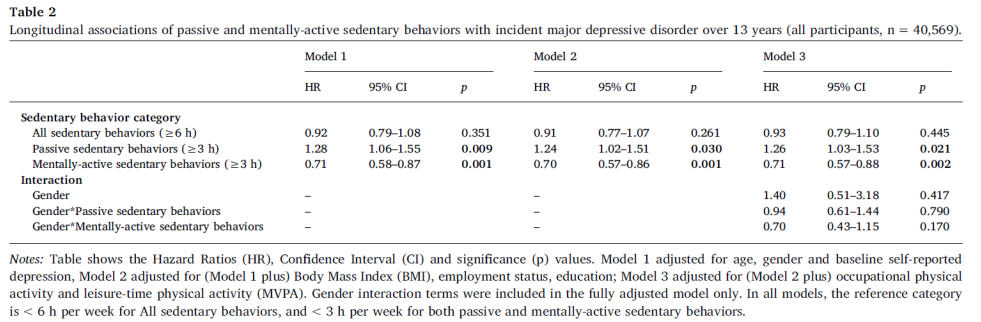
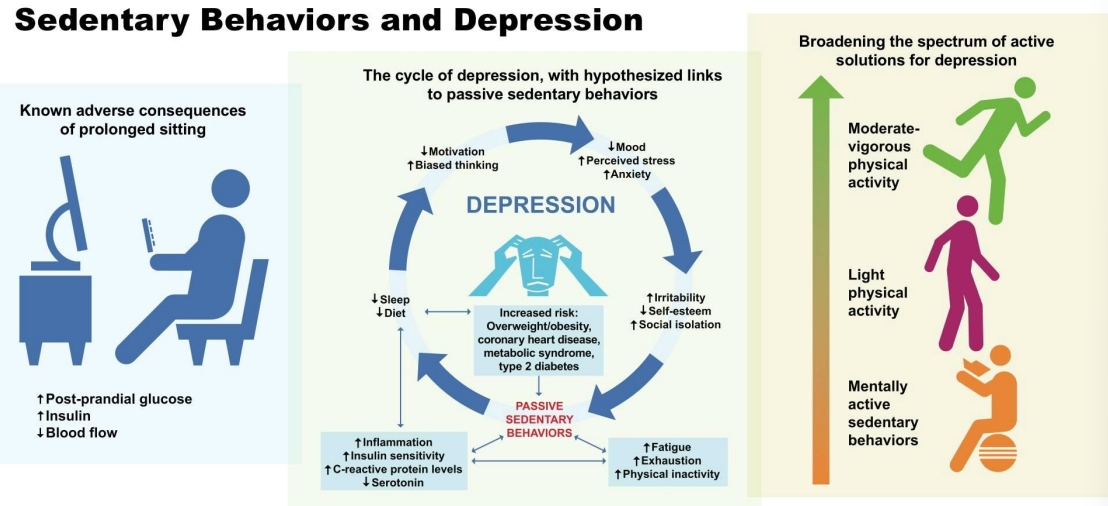
While interventions at work should focus on interupsting sedentary time, interventions focusing on reducing sedentary behavior in leisure time should focus in particular on reducing time spent in mentally passive sedentary behavior such as the time spent watching television.