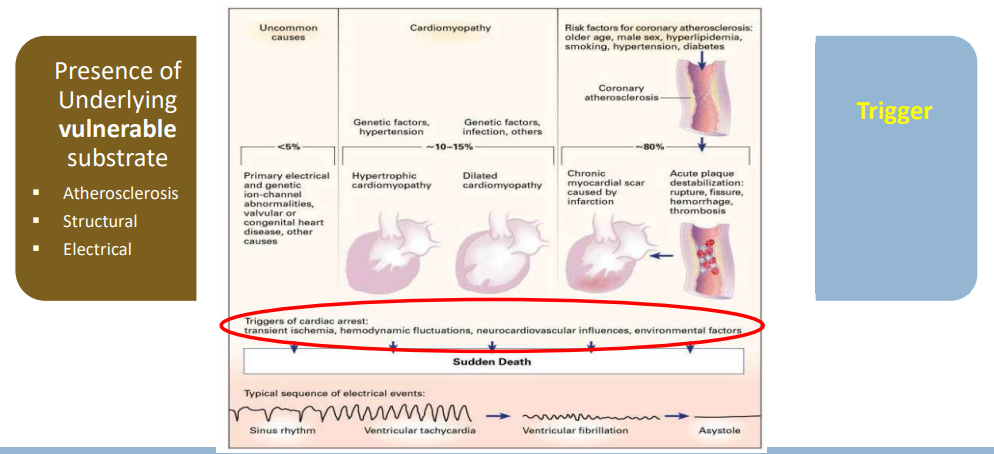
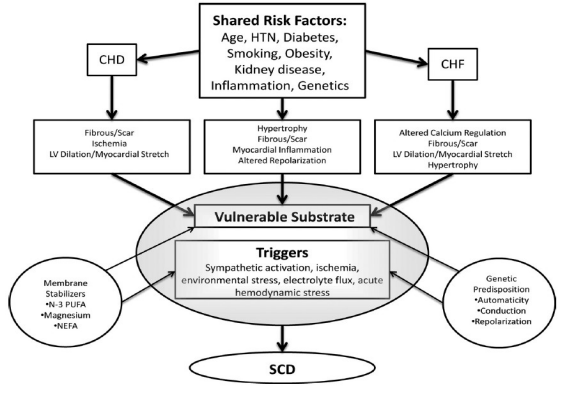
80% of individuals that die with SCD have underlying atherosclerosis and risk for myocardial infarction or mild ischemia. These conditions lead to loss of cardiac muscle and scar formation, which is a cause of infarction
structural - Cardiomyopathy)
Hypertrophy of the heart (heart is not functional because the walls are thick and stiff—> loses contractility) or dilated cardiomyopathy
electrical (<5%)
Primary electrical and genetical abnormalities, like ion-channel abnormalities, valvular or congenital heart disease and other causes
Presence of trigger
The trigger can be anything that causes ischemia or that makes the heart susceptible to ischemia/faster repolarization of cardiac cells
Transient ischemia: exercise is too demanding and we cannot increase blood supply as much
Hemodynamic fluctuation: the wall of the marathon
Neurocardiovascular influences: increases activity of sympathetic system
Environmental factors: temperature is too high
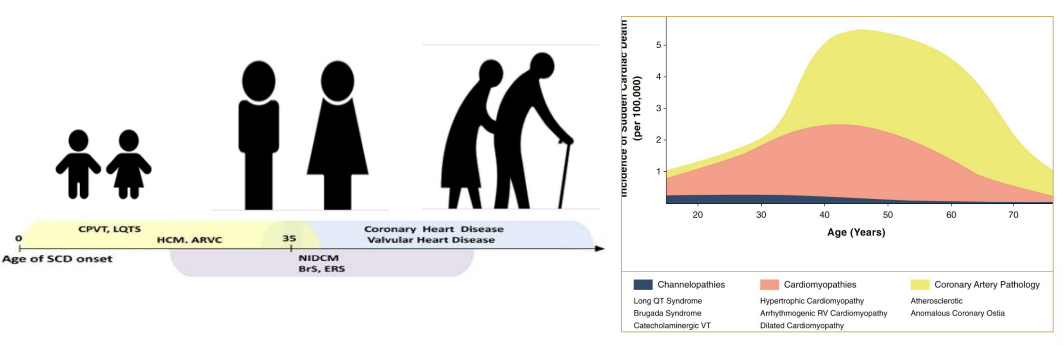
Aetiology differs according to age
Young patients and children
Electrical issues
Catecholaminergic VT (CPVT)
Brugada syndrome
Long QT Syndrome
> 15-20 years old
Structural issues and cardiomyopathies
Hypertrophic Cardiomyopathy
Arrhythomogenic RV Cardiomyopathy
Dilated Cardiomyopathy
> 35 years old
Structural issues and cardiomyopathies
Hypertrophic Cardiomyopathy
Arrhythomogenic RV Cardiomyopathy
Dilated Cardiomyopathy
High incidence of coronary artery pathology
Artherosclerotic
Anomalous Coronary Ostia
Valvular heart disease
Coronary heart disease
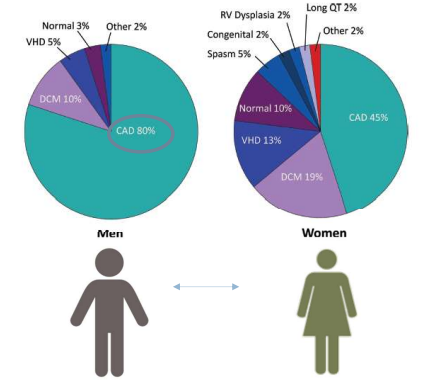
Aetiology of the underlying pathology differs according to sex
Men are extensively affected by Coronary Artery Disease
Women is more diverse
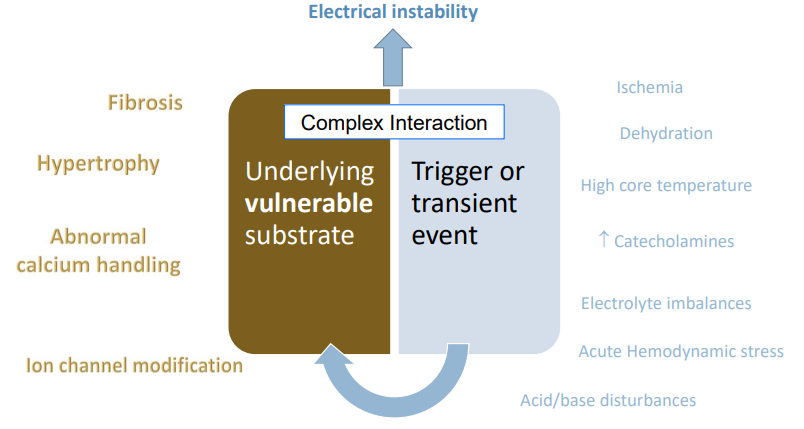
Electrical Instability
Results from the complex interaction between underlying a vulnerable substrate and a trigger or transient event
The electrical instability is followed by ventricular arrythmia(85%) and asystole.
Asystole is the cessation of heart activity - the heart can only beat so fast until it stops
Usually a risk factor is present before a CHD/CHF, and can cause either hypertrophy, myocardial inflammation or fibrous—>result in vulnerable substrate—> and if a trigger is stimulated, it can lead to SCD.
Yet, there are some genes that protect against triggers + if environmental changes were applied.