Diagnostic criteria
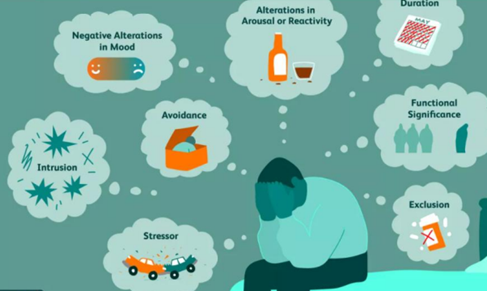
- A: Exposure to traumatic stressor, either as victim, perpetrator or witness (one required)
- Death, threatened death, actual or threatened serious injury, actual or threatened sexual violence
- B: Re-experiencing symptoms (one required)
- Recurrent, involuntary, and intrusive memories, flashbacks, traumatic nightmares, intense or prolonged distress or marked physiologic activity, after exposure to reminders of traumatic event(s)
- C: Avoidance behaviours
- Persistent effortful avoidance of distressing trauma-related stimuli after the event
- D: Cognitive distortions (two required)
- Inability to recall key features of the traumatic event, persistent (and often distorted) negative beliefs and expectations about oneself, or the world.
- Persistent distorted blame of self or others for causing the traumatic event, persistent inability to experience positive emotions
- E: Increased arousal (two required)
- Irritable or aggressive behaviour, self-destructive or reckless behaviour, hypervigilance, exaggerated startle response, concentration problems, sleep disturbance
- F: Duration
- Persistence of symptoms (in B, C, D, E) for more than one month
- G: Functional impairment
- Significant symptom-related distress or functional impairment (e.g. social, occupational)
- H: Exclusion
- Disturbance is not due to medication; substance use or other illness
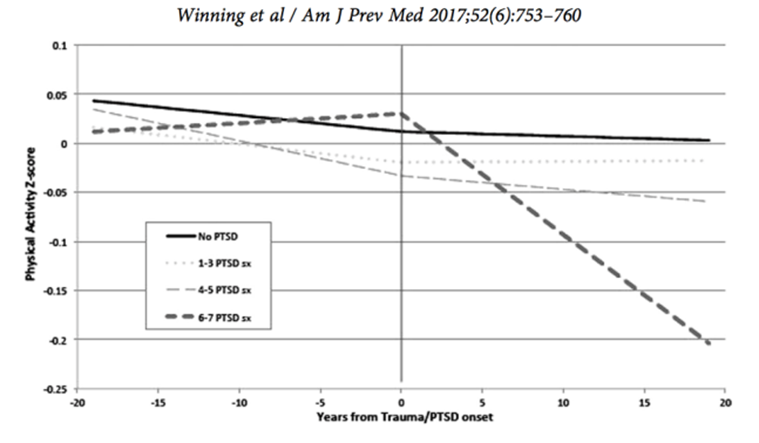
Changes in physical activity following a traumatic event and the development of PTSD