Physical activity and distraction
- Diversion from unpleasant stimuli or painful somatic complaints leads to improved affect following physical activity.
- Distraction may account for some of the beneficial effects of acute exercise.
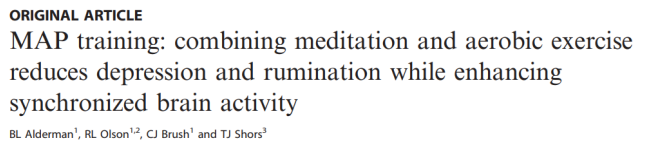
Although previous research has supported the individual beneficial effects of aerobic exercise and meditation for depression, these findings indicate that a combination of the two may be particularly effective in decreasing ruminative thought patterns.
Physical activity and social interaction
- Social relationships and mutual support account for a substantial portion of the physical activity effects on mental health.
- However, studies comparing individual home programs and community group programs found that social interaction appears to be unnecessary for psychological benefits to occur.
- There is currently insufficient evidence to support the social interaction hypothesis as the primary mediator of the beneficial mental health effects of physical activity, but social interaction may have some importance at the beginning of a program.