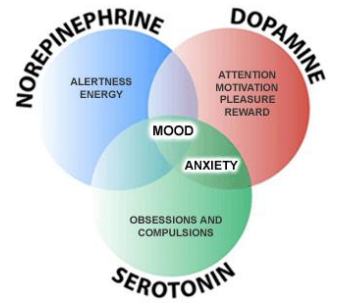
The primary monoamines in the brain, noradrenaline (norepinephrine), dopamine and serotonin affect arousal and attention and also have been implicated in a wide range of mental disorders.
ꞵ-endorphins help to reduce physical discomfort and soreness following exercise.
It has never been demonstrated that ꞵ-endorphins might alter mood states.
Runner's high
Since ꞵ-endorphins may not efficiently cross the Blood Brain Barrier, peripheral activation of endorphins due to exercise in the systemic circulation is unlikely to cause any changes within the brain.
Therefore, while endorphins are released during exercise and can stop peripheral muscle soreness that results from exercise, they cannot be the source of the runners’ high
Physical activity and endocannabinoids
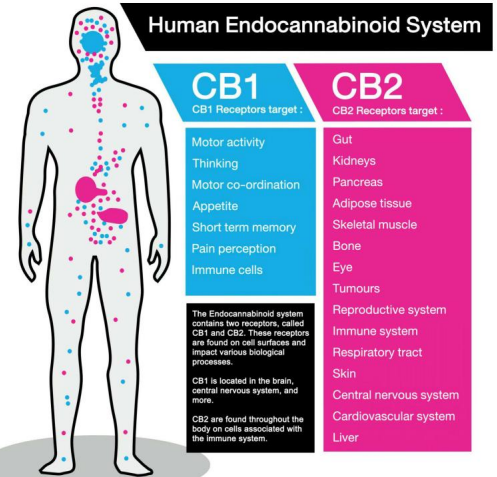
The endocannabinoid system plays a role in the homeostasis of the body.
They play a role in sleep, appetite, pain, inflammation, mood, memory and reproduction.
It consists of
endocannabinoids
enzymes
endocannabinoid receptors.
Endocannabinoids, also called endogenous cannabinoids, are molecules made by the body.
There are two key endocannabinoids:
anandamide (AEA): improved mood, runner’s high???
2-arachidonoylglyerol (2-AG): appetite, pain response, immune system functions
Endocannabinoids do pass the Blood-Brain Barrier
There is a consistent increase in both AEA and 2-AG following acute exercise across modalities (e.g., running, cycling) and in those with and without pre-existing health conditions (e.g., PTSD, depression)
Effects of chronic exercise are inconsistent
FITT principles for the most optimal outcomes are currently unknown.