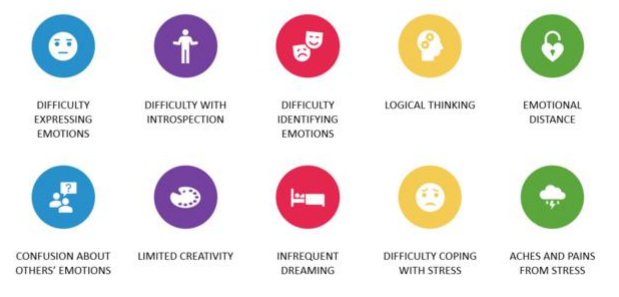
It has been argued that alexithymia may be a precursor in the development of difficulties with emotional regulation, in that, a prerequisite to be able to manage undesirable emotions is the ability to identify emotions clearly.
Senses
The Classic Five Senses
Tactile
Tactile receptors on the skin identify the sensation of touch
Auditory
Auditory receptors, located in the inner ear identify loud, soft, high, near and far noises
Visual
Visual stimuli are picked up by visual receptors in the eye and provide information about colour contrast, shape, form, and movement
Gustatory
Taste is picked up by gustatory receptors in our tongues and linked to our olfactory senses
Olfactory
Smell is processed through olfactory receptors located in the nose
The Three Hidden Senses
Vestibular
Vestibular receptors are located in our inner ear and process balance and movement. Activity that changes the position of our heads affects our vestibular senses. Usually, the vestibular and visual senses work closely together
Proprioception
Proprioception receptors are located in muscles and joints of the body and provide information about where your body is in space. Our sense of body awareness and coordination is impacted by proprioceptive input
Interoception
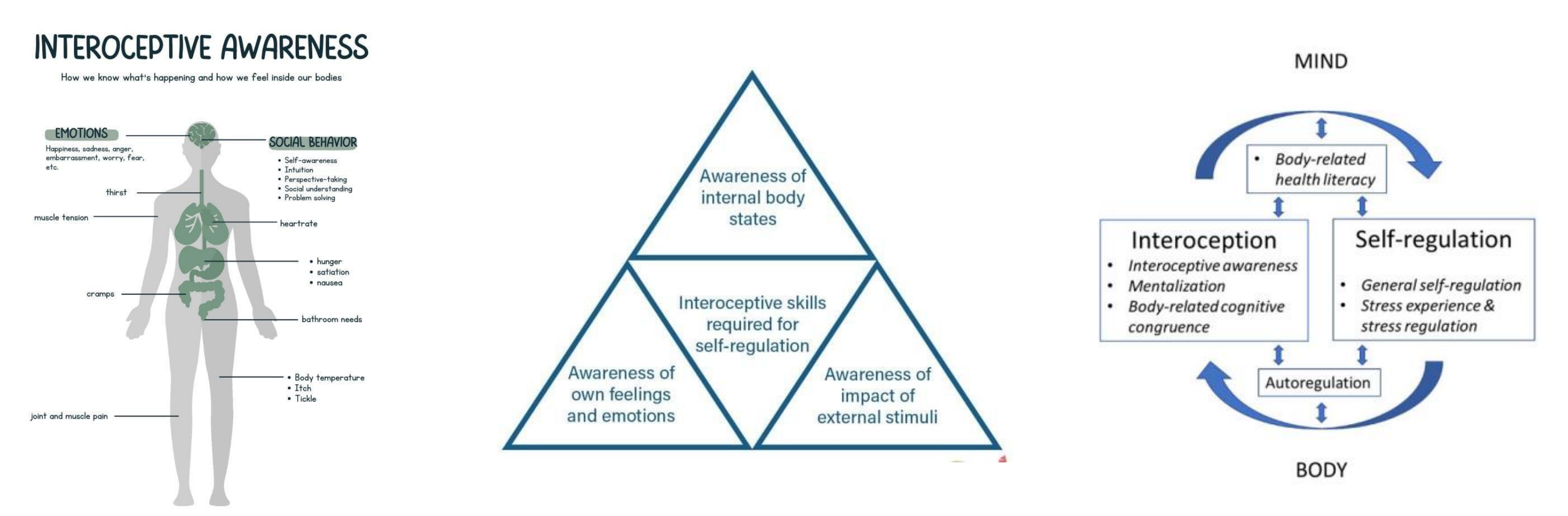
Receptors on our internal organs are responsible for interoception signals that provide information on our internal body and emotional status
Interoceptive awareness
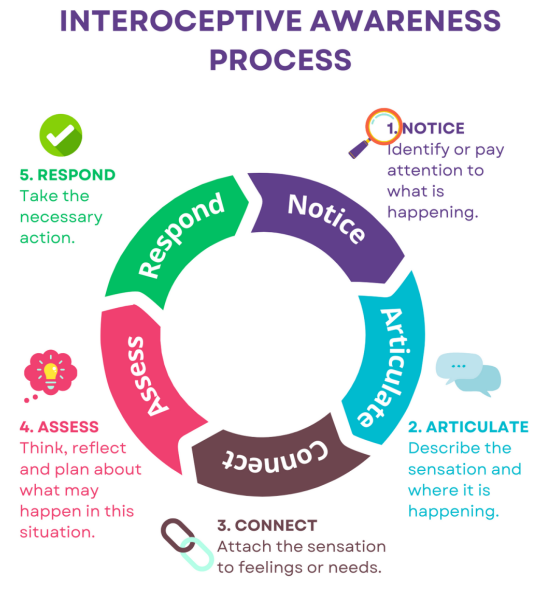
Interoceptive awareness reflects the capacity to attune to physiological experiences such as changes in muscle tension, temperature, or heart rate.
Interoceptive awareness has been found to positively predict greater emotional regulation strategies.
Conversely, deficits in interoceptive awareness have been associated with mood and anxiety disorders, eating disorders, drug addiction, posttraumatic stress disorder and somatic symptom disorders
Integrate interoceptive awareness exercises in treatment approach
Link between mindfulness and exercise addiction
Those who are more mindful report a lower likelihood of exercise addiction.
The importance of a focus on interoceptive awareness and self-regulation