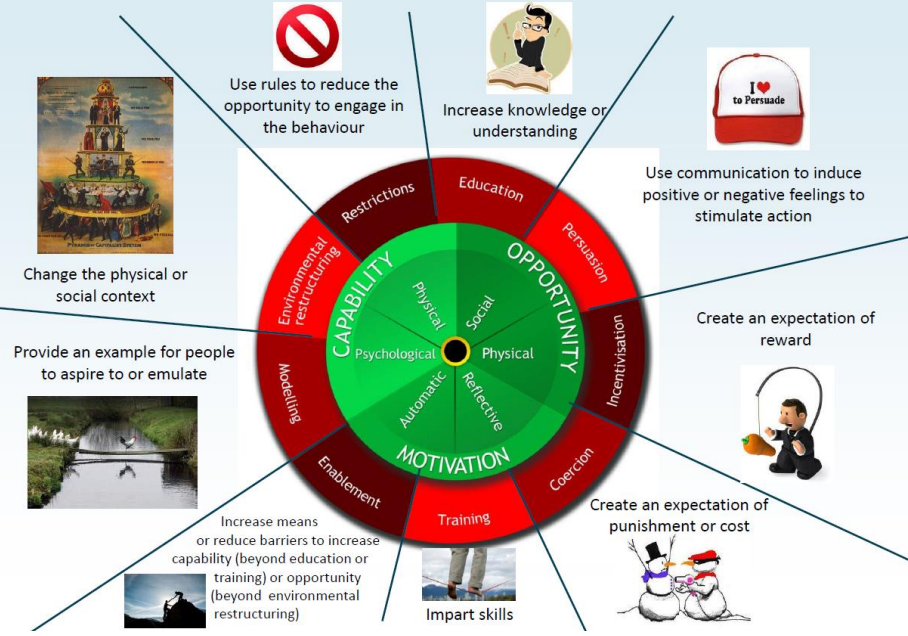
Guided by the analysis made in the COM-B model. Intervention functions are activities designed to change behaviours
Intervention development is centred in two steps
Step 1: What do we want the person / group of people to do (differently)? -> Specify behaviour
Step 2: What will it take them to do it? -> Behavioural analysis and diagnosis
To change behaviour we first need to understand it
What needs to shift/change?
The intervention types are:
Environmental restructuring
Modelling
Enablement
Training
Coercion
Incentivisation
Persuasion
Education
Restrictions
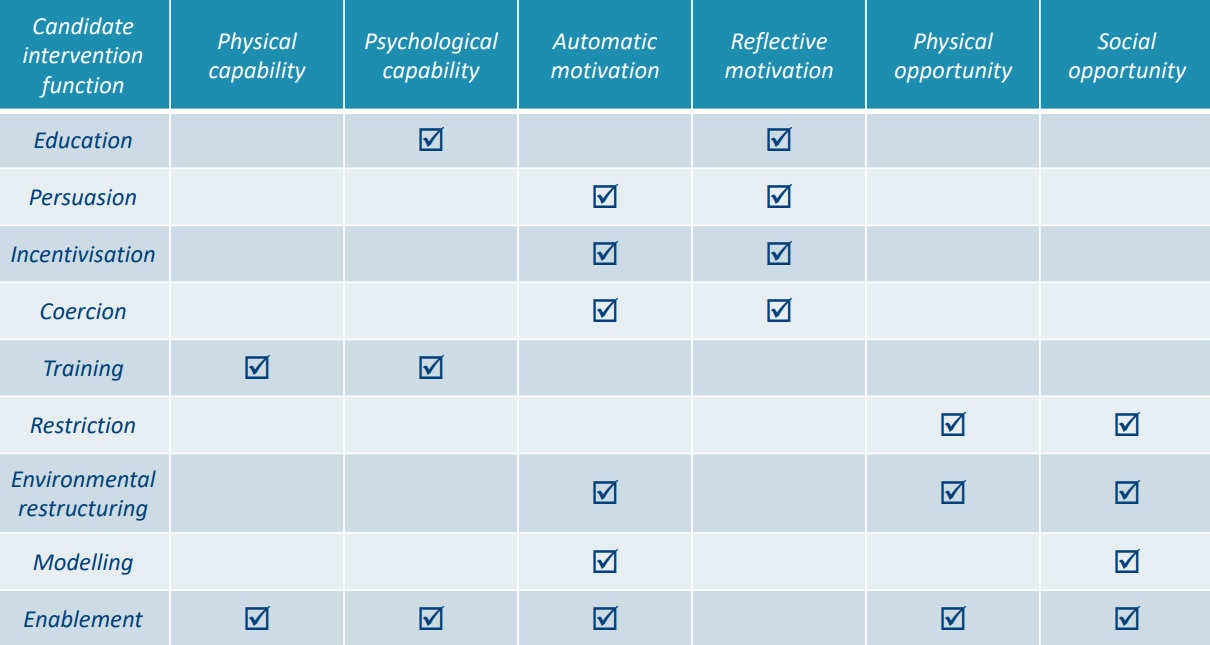
It is important to be able to link the sources of behaviour to intervention functions in this stage. In this table we can see which interventions are most appropriate for tackling a specific target behaviour.
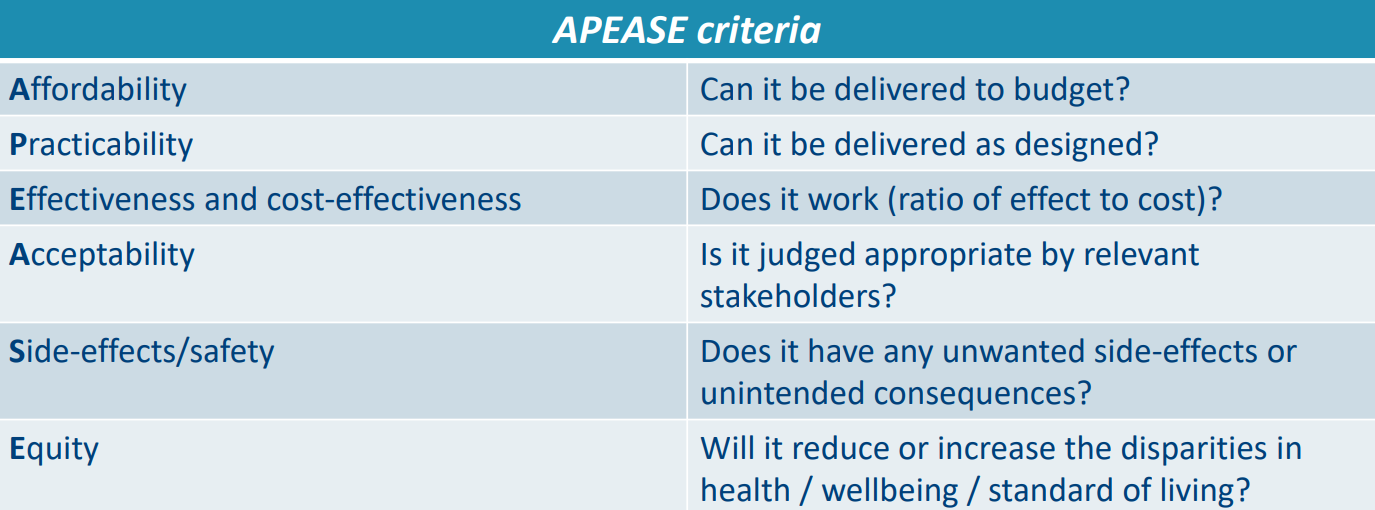
There are additional dimensions to be taken into account (specific to the environment) before choosing the intervention type. The APEASE criteria (Acceptability, Practicability, Effectiveness/cost-effectiveness, Affordability, Safety/side-effects, Equity) are applied when deciding on the intervention strategy and its implementation in the given context. These criteria should be applied in a structured way using available evidence combined with expert judgement.