all episodes of an abnormally low plasma glucose concentration that exposes the individual to harm.
Usually < 70mg/dl
Patients without known diabetes: Whipple triad
Recognize that the patient’s symptoms could be caused by hypglycemia
Document that the patient’s plasma glucose concentration is low (<55mg/dl) when the symptoms are present
Demonstrate that the symptoms are relieved by correction of the hypoglycaemia by administration of glucose
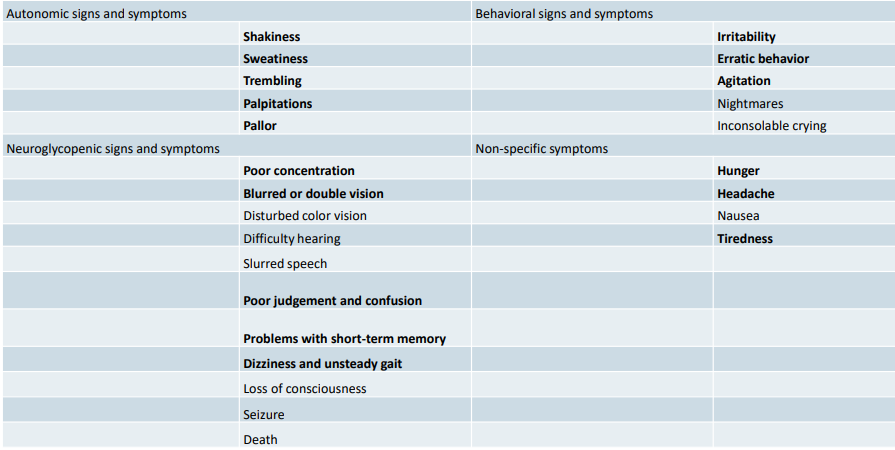
Signs
Symptoms
Autonomic (sympatho-adreno) and neuroglycopenic
sweating
shaking
confusion
altered mental state
pallor
hunger
palpitations
anxiety/arousal
irritation
headache
dizziness
drowsiness
tiredness
if untreated
consciousness
epileptic seizures
coma/death
When?
can happen
in both type I and type II diabetes
if an oral antidiabetic or insulin dose is too high
because he/she took medication without eating enough
if exercising too much and eating too little
because of a serious infection/illness/alcohol binge
Prevention
Avoid vigorous exercise before blood glucose has been adequately controlled
Have knowledge and awareness of the signs, symptoms and management of hypoglycaemia/hyperglycaemia
Some medications may mask or exacerbate exercise-related hypo- or hyperglycaemia including beta-blockers, diuretics, calcium channel blockers
Always carry a carbohydrate
Avoid exercise at time of peak insulin effect; alternatively consume a CHO snack 30 min before exercise or decrease insulin or oral hypoglycaemic dose before exercise
TEST blood glucose frequently!!!
Hydrate adequately
Inject insulin abdominally before exercise; do not use active muscles as injection sites for insulin pre-exercise
Hyperglycaemia
Signs
frequent urination
extreme thirst
dry tongue
drowsiness
nausea/headache
weakness
blurred or impaired vision
Diabetic Keto-acidosis
What
emergency that occurs more frequently in type 1 diabetes
high blood sugar - between 300-500mg/dl
ketonemia - build up of ketones in the blood
ketonuria - ketones in urine
acidosis
What can the PT do?
Know the medical history of your patient, including the medication he is taking!! Measure BG before exercise / during / after exercise
IF Glucose
<75 mg/dl: consume 15g monosaccharides and re-evaluate (15 min rule)!!
<100 mg/dl: be alert for hypoglycaemia
300 mg/dl: rule out keto-acidosis, in case of keto-acidosis: no high-intensity exercise