Pulmonary Factors - Lung Diseases
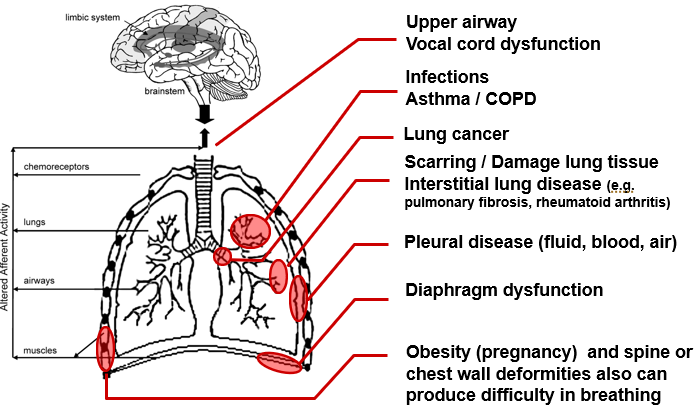
- Ventilatory need
- metabolic (maintain pH, DO2)
- Opioids
- Vd/Vt
- alteration of breathing pattern
- hypoxia
- oxygen supplements
- metabolic (maintain pH, DO2)
- Work of breathing
- lung/chest wall compliance
- depending on problem
- airflow obstruction
- bronchodilators - LVR
- hyperinflation
- bronchodilators - LVR
- lung/chest wall compliance
- Capacity of the pump
- respiratory muscle strength/endurance
- respiratory muscle training
- nutrients, DO2
- nutrition/oxygen
- respiratory muscle strength/endurance
- Affective component
- Opioids, psychotherapy, desensitisation, breathing retraining
Cardiac failure - Pulmonary Oedema
- The shortness of breath in heart failure is caused by
- decreased ability of the heart to fill and empty
- Pulmonary oedema -> high Vd/Vt, impaired diffusion cap. And V/Q mismatch
- Increased peripheral extraction due to low cardiac output -> low PvO2
- decreased ability of the heart to fill and empty
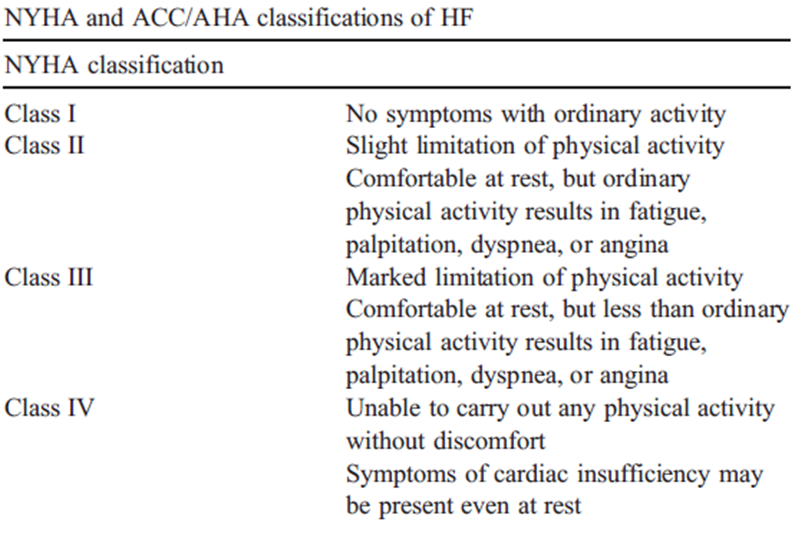
- Common symptoms of heart failure are:
- Orthopnoea
- Cough at night (when lying supine)
- Exertional dyspnoea
- Fatigue
- Fluid weight gain
- Biomarker:
- NT-pro-B-type natriuretic peptide
Pulmonary Embolism
- Breathlessness is usually sudden and associated with rapid breathing and may be accompanied by chest pain.
Haematological factors - Anaemia
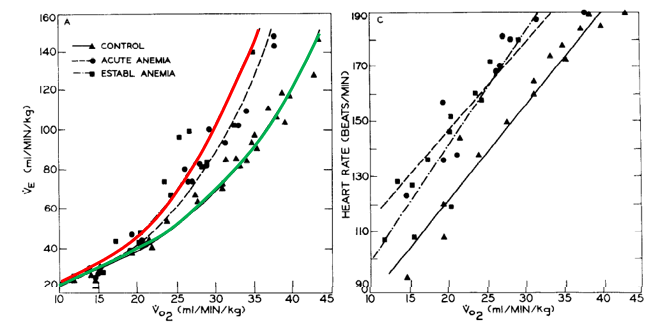
- Anemia, low red blood cell count
- Increased metabolic states such as high thyroid level, shock (extremely low blood pressure), severe systemic infection (sepsis), or fever.
- Kidney or chronic liver problems: Because of increased fluid in the lungs
Reduced respiratory muscle function - Neuromuscular conditions
- Increased pressure in the brain caused by trauma, tumors, stroke, or bleeding. When the portion of the brain that regulates respiration is affected, these rare conditions may result in difficulty in breathing. Other neurological symptoms usually precede shortness of breath.
- Nerve and muscle disorders that affect the ability to coordinate and expand the chest and that affect movement of the diaphragm may produce difficulty in breathing.
- Neuromuscular disease
- Diaphragmatic dysfunction / paralysis
sometimes dyspnoea is surprisingly absent
Causes of abnormal respiratory muscle strength
- Neurogenic
- Motor Neurone Disease
- Polyneuropathy
- Trauma of nerve
- Neuropraxia
- Neuralgic amyotrophy
- Poliomyelitis
- Multiple sclerosis
- Neuromuscular Junction
- Myasthenia Gravis
- Eaton-Lambert Syndrome
- Anaesthetics
- Muscular
- dystrophy
- atrophy (undernutrition/deconditioning)
- myopathies
- systemic lupus
- acid maltase deficiency
- biochemical abnormalities
Psycho-physiological interactions - hyperventilation syndrome
- Anxiety disorder:
- Anxiety may be accompanied by heavy and rapid breathing (hyperventilation).
- Shortness of breath usually resolves once the anxiety episode ends.
- Dysfunctional breathing
- Hyperventilation ‘syndrome’
Treatment
- Education – explanation – exclusion other problems
- Cognitive behavioural therapy
- Breathing control exercises