We have 2 types of thinking systems
- Type 1 - Automatic affective system: Driven by feelings, habits, triggers in our environments
- Rapid, requires little or no cognitive engagement
- Based on emotional responses and response to “choice architecture”
- Example: default options, information about others’ behaviour, cues outside awareness
- Type 2 - Reflective, goal-oriented system: Driven by our knowledge, values and intentions.
- Engaged by traditional health promotion
- Alter beliefs and attitudes, motivate people with the prospect of future benefits, or helps them develop self-regulatory skills
- Takes more energy because it requires getting out of our habits
Metaphors
- Important to use the correct metaphor
The elephant metaphor
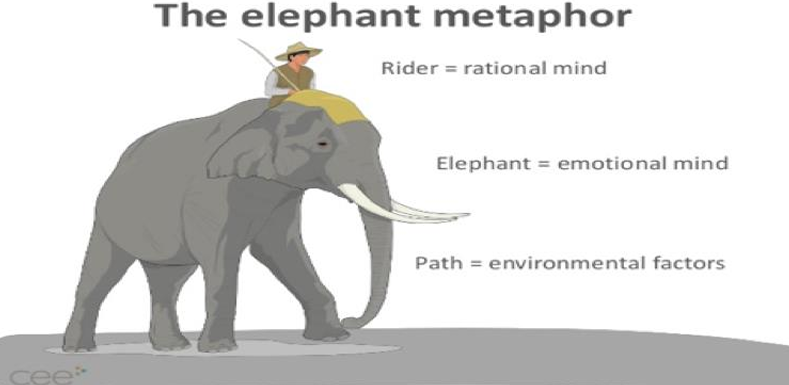
- Elephant = emotional mind -> biggest part
- Rider = Rational mind -> the rider is in charge
- Path -= environmental factors
The conscious car metaphor
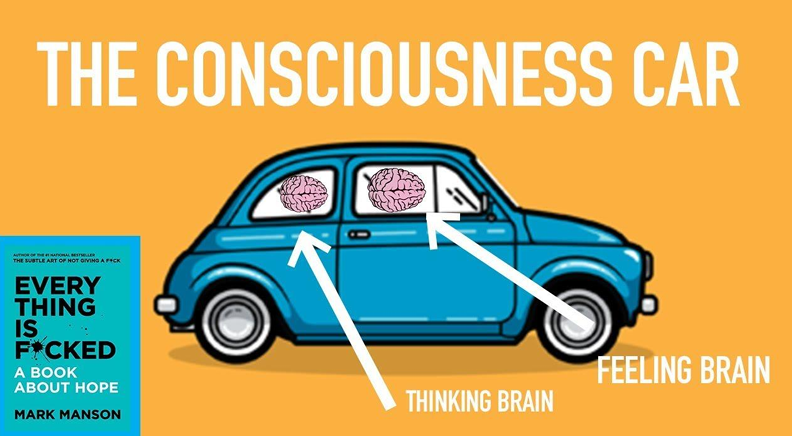
- Feeling brain -> decides where we are going
- Thinking brain -> only gives comments
The professor and clown metaphor - the most correct metaphor
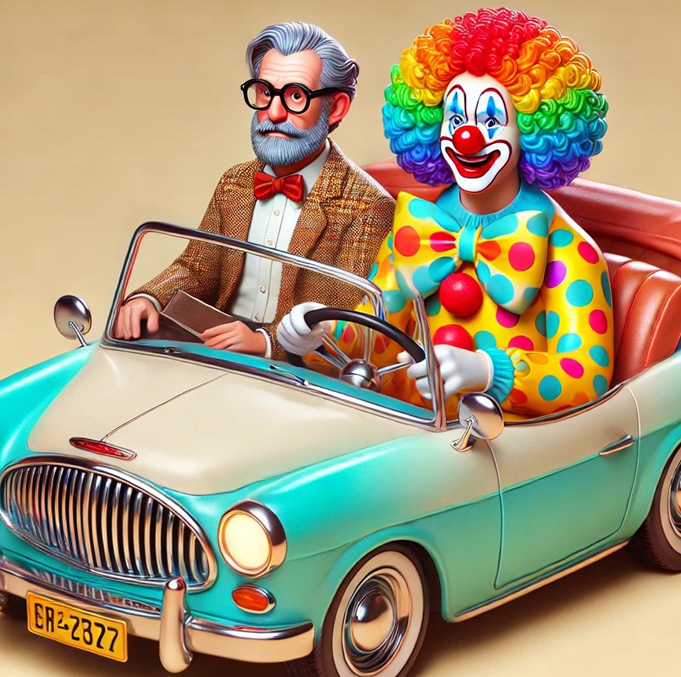
- The clown decides where we are going -> Emotions drive us
- The professor advises with the pros and cons of each decision -> Can be used in a state of calm
What do you do as a physiotherapist?
- As a physiotherapist, you need to become a behavioural engineer - a habit designer:
- Create a path/environment that seduces the clown in you to do the desired behaviour and reduces temptation to do the undesired behaviour.
- This is a more effective approach rather than just relying on motivation alone.
- It is important to remember that being insufficiently physically active is different than being sedentary
- In the 60s, the impact of sitting too long without interruption was compared to the effect of smoking in terms of health detriment and death.
- This is not true, but it is still worthwhile for other outcomes (e.g., in terms of low back pain) to counter existing external social norms about sitting.