Target behaviour with the COM-B model of behaviour
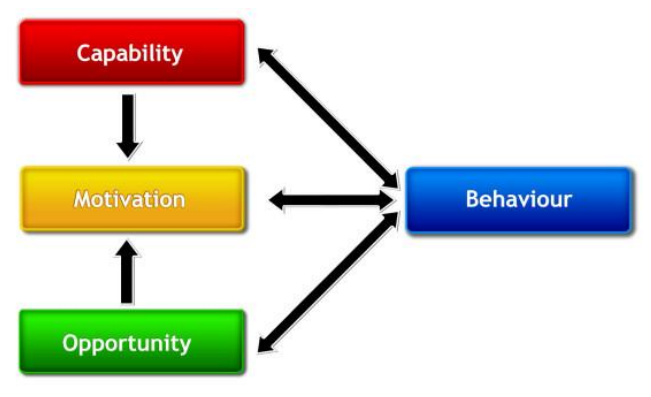
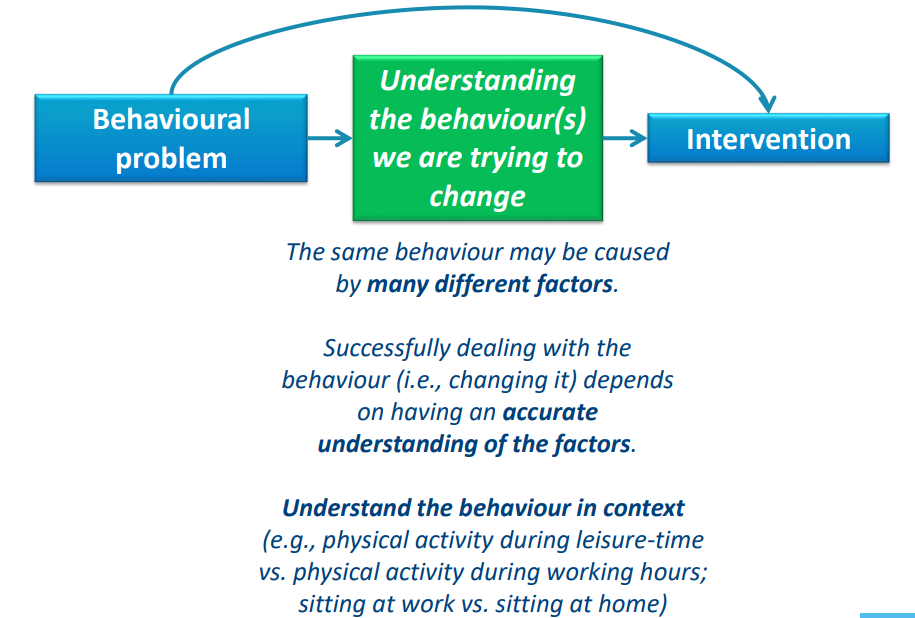
Understand the behavioural problem we want to change, as well as, the context - Capabilities, Opportunities and Motivations - that result in specific behaviours
"Behaviour is determined by a system of three interacting features: physical or psychological capabilities to enact the behaviour, opportunities in the physical and social environment to execute the behaviour, and volitional (e.g. planning, evaluating) and automatic processes (e.g. emotional responses, habits) that provide the motivation for the direction and intensity of behaviour”
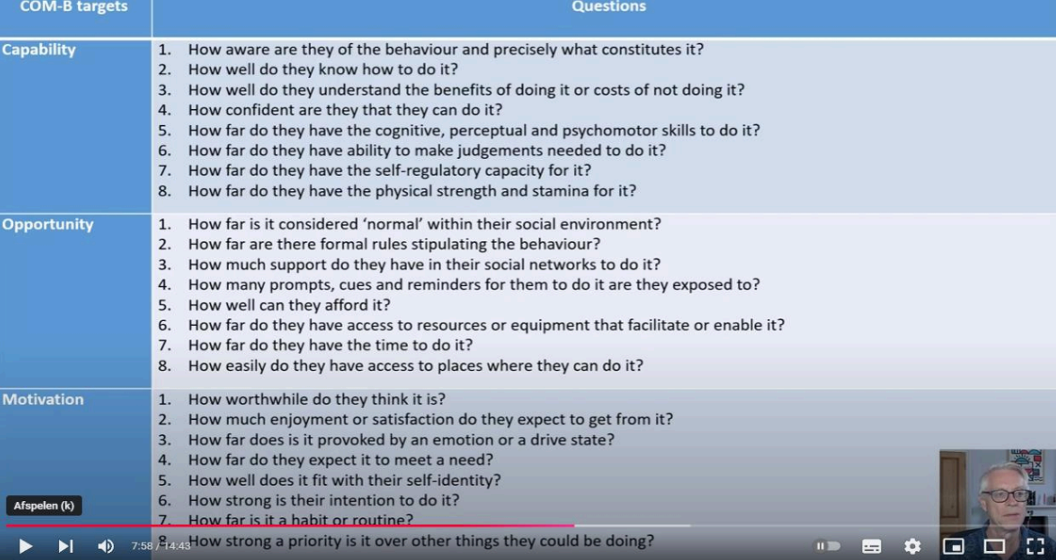
The goal is to analyse the behavioral problem to make sure we don't overlook any determinants of behaviour:
Physical capability: Physical skills to perform the behaviour
Psychological capability: The psychological ability to perform the behaviour or to engage in the necessary thought processes – memory, comprehension, reasoning, decision making
Automatic motivation: Automatic processes involving emotions and impulses that arise from associative learning and/or innate dispositions (system 1 thinking)
Driven by feelings, habits, triggers in our environments Rapid, requires little or no cognitive engagement (alter habits, emotional responses, response to “choice architecture” e.g., default options, information about others’ behaviour, cues outside awareness)
Driven by our knowledge, values and intentions: Engaged by traditional health automatic, affective system driven (alter beliefs and attitudes, motivate people with the prospect of future benefits, or help them develop self-regulatory skills)
We target the reflective thinking to provoke behavioural change, but don't overestimate its power since most of our life is lead by the system 2. We should access the reflective thinking to create an environment in which the automatic system will make good behavioural choices.
Social opportunity: Opportunity afforded by the cultural milieu that dictates the way that we think about things
Physical opportunity: Opportunity afforded by the environment
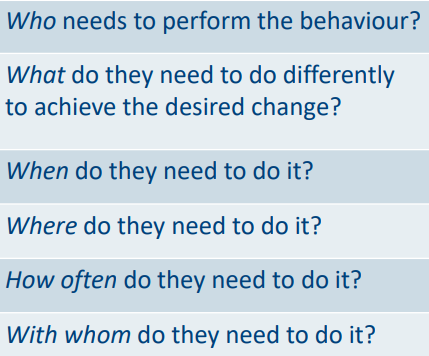
Guiding questions for the process of identifying the target behaviour