- Our goal is to transform our patients into problem solvers themselves and we can assist them in self-monitoring
- Assist: mental contrasting and implementation of intentions
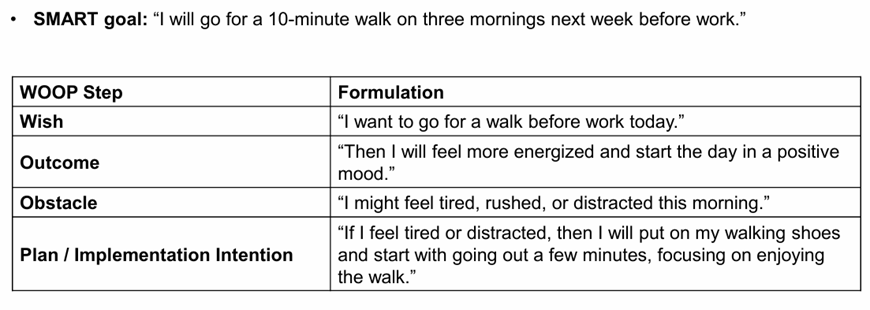
- Mental contrasting and implementation of intentions is done through the WOOP model. This is a self-management strategy that puts emphasis on contrast between the best outcome and the biggest obstacle. Through this practice they will become skilled at overcoming barriers
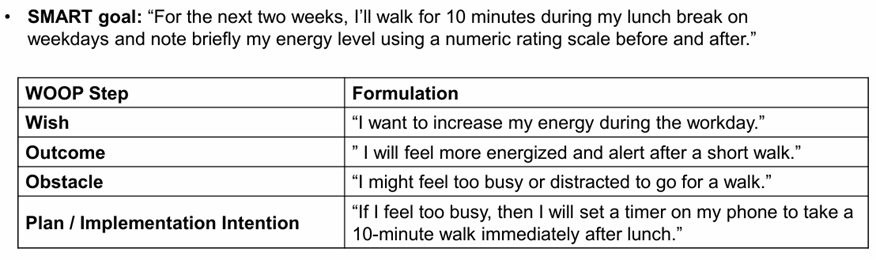
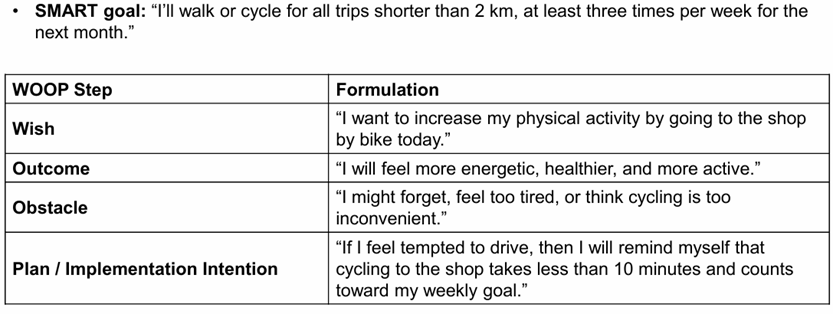
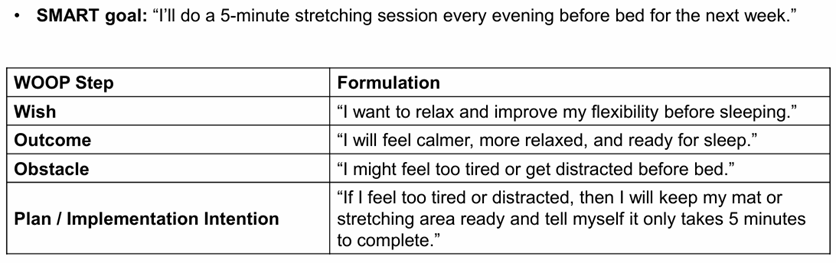
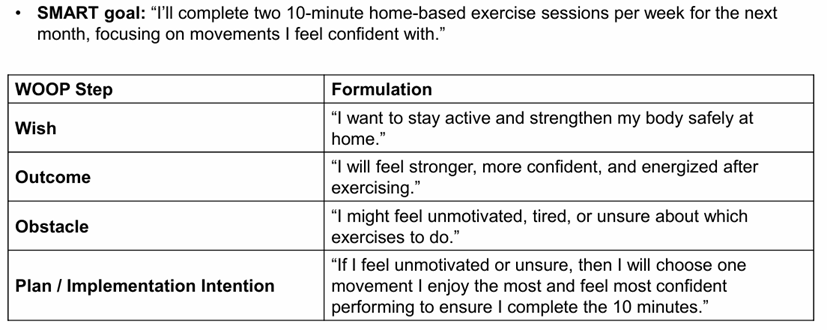
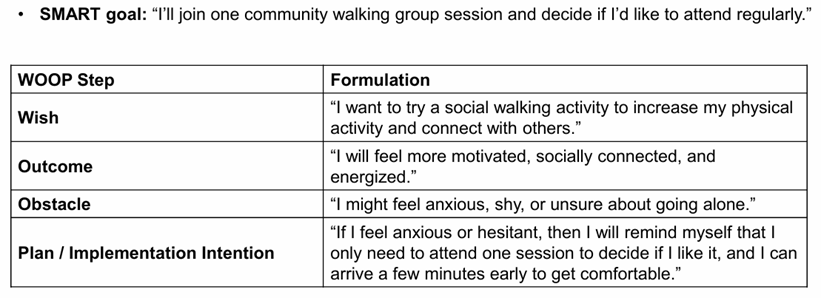
- Wish: Participants first identify a personal wish or goal (e.g., being physically fit).
- Outcome: They identify and imagine the most positive future outcomes of goal attainment (e.g., being healthier).
- Obstacle: After that, they mentally contrast the most positive future outcome with the primary personal obstacle currently impeding their goal attainment (e.g., feeling too tired to exercise).
- Plan/Implementation of intentions: They search for instrumental plan to overcome the obstacle and form implementation intentions
- Intentions can be about "just doing it even if you don't want to"
- This model specifies when, where and how they want to strive for their personal goal in an if-then format ("als dat gebeurt, dan doe ik dit".)
- Example: “If I feel too tired to exercise, then I will tell myself ‘You can do it!’ and go for a quick run"
- The assistance is more effective if:
- We discuss how it went in the next session: Use the relapse exercise to explore the WOOP strategy
- PA counselling in group: More empathetic/relatable because similar people go through the same obstacle
- We use WOOP with the most important obstacle and outcome in that moment.
- Evidence: 40% of people who used WOOP in relation to going to the gym, remained active, compared to all the people that had free access to the gym but did not use the WOOP strategy
Examples: From SMART to WOOP
- Evidence: Patients attain and make more efforts towards their goals when they use the mental contrasting strategy
- This study found a small but significant effect and this can has important effects in changing people's behaviour