Why considering “providing support” as a physiotherapist?
As physiotherapists, we have many roles
Observing, testing and analysing
Considering anatomical, medical, psychological, psychophysiological and social aspects of the health problem
A reliable and valid assessment is essential to this end
Evidence-based clinical reasoning in interaction with the patient
It is part of our job to be "connectors" of our patients with the care they need.
Tangible support (services, financial, material): Tanglible support is part of our job as a ‘coach’. Consider the daily barriers (financial, social) because these things have higher risks of physical conditions and consider the supports they might be able to apply for
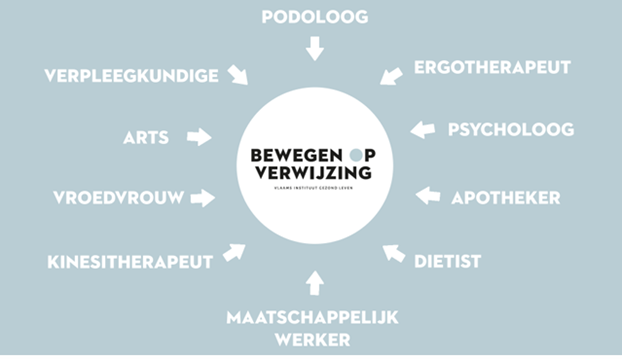
Provide supervised physical activity (ex: Bewegen op verwijzing): Different health professionals can refer the patient to this programme
Look for incentives / reimbursements from local authorities: What is available in the community?
Social prescribing as a health strategy: Involves a health or social care professional connecting an individual with an appropriate community-based opportunity to improve that individual’s health (physical and/or mental) and wellbeing (physical, mental and/or social)
For example, a local jogging group to increase physical activity levels, or a hobby club to reduce feelings of loneliness.
Green and blue social prescribing: Connect them with greenery and water based therapies
Nature's restorative effect: Combination of PA and nature has additional benefits for physical and mental health
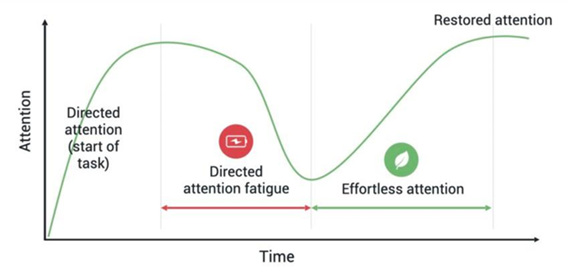
Attention Restoration Theory (Kaplan, 1995) posits that the mental fatigue (rumination that cost a lot of efforts and energy) associated with modern life is associated with a depleted capacity to direct attention. According to this theory, spending time in natural environments enables people to overcome this mental fatigue and to restore the capacity to direct attention to the present (mindfulness is restored).
Directed attention enables us to remain focused on effortful tasks for extended periods.
Involuntary attention is effortless, automatic, and is induced by intrinsically interesting or exciting stimuli.
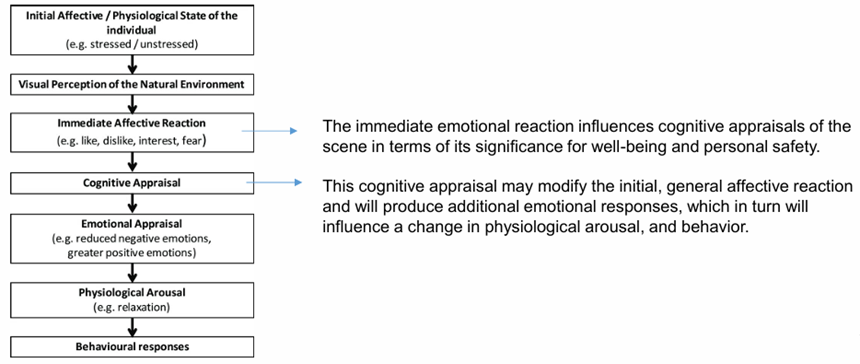
Stress Reduction Theory (Ulrich, 1991) describes how spending time in nature (even the visual perception of nature) might influence feelings or emotions by activating the parasympathetic nervous system to reduce stress and autonomic arousal because of people’s innate connection to the natural world.
Informational support
Education on benefits of physical activity
Information on the available facilities and services
Verbal /written / online resources
Esteem and emotional support: Part of our job as a "coach" and "confidant".
Provide reinforcement
Praise even small changes
Use motivational interviewing skills
Spend time with and listen to the patient
Active listening and counseling (also here motivational skills are essential)