Step 3 of Exercise program design
Step 3.2: Recommendation for Exercise Type
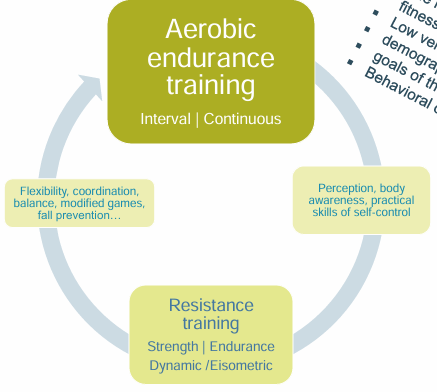
In general... for apparently healthy adults
- Individualised based on
- results of clinical evaluation/history/fitness tests
- low vs high risk patient
- demographic characteristics
- goals of the patient
- behavioural characteristics
- For most adults, an exercise program including aerobic, resistance, flexibility and neuromotor exercise training is indispensable to improve and maintain physical fitness and health
- Some individuals will want to or need to include only some of the health-related components of physical fitness in their training regimen or exercise less than suggested by the guidelines
- Performing some exercise is beneficial, especially in inactive or deconditioned individuals
- should be encouraged except where there are safety concerns
Type of exercise - Aerobic exercise program
- Aim:
- increase cardiorespiratory fitness and health
- aerobic activities using large muscle groups in a continuous, rhythmical fashion
- increase cardiorespiratory fitness and health
- Types of exercises categorised according to skills/number of body parts
- A: cycling, walking, aqua aerobics,...
- B: jogging/running, rowing, spinning, step aerobics,...
- C: aerobic dancing, rope skipping, swimming, cross-country skiing,...
- D: basketball, soccer, racket sports,...
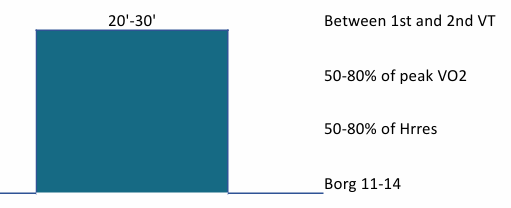
- Continuous training method
- More expensive(?)
- Higher intensity
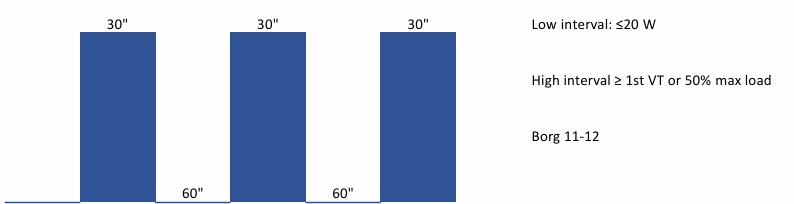
- Interval training method
- peak workload intensity (Ppeak)
- Peak workload duration (tpeak)
- Recovery load (Prec)
- Recovery duration (trec)
- Mean load (Pmean)
- Number of intervals
- ≠ categories
- Long intervals: 3-15 minutes at 85% to 90% of VO2peak
- Moderate intervals: 1-3 minutes at 95-100% of VO2peak
- Short intervals: 10 seconds at 100% of peak power output or using BORG
- !!!! AND one can play with INTENSITY in all of these categories
- Low intensity interval training
- High intensity interval training
- Choice of exercise also depends on 'how easily the exercise intensity can be graded' and adjusted
- E.g. bench step aerobicc
- different heights
- different cadences
- adding handheld weights
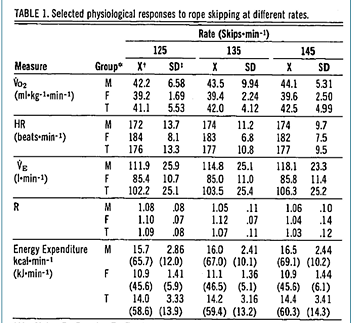
- Rope skipping
- 11.5-12.7 METs
- no change with increasing speed
- E.g. bench step aerobicc
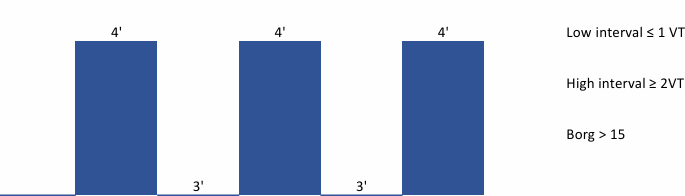
Intensity
- Overload principle!
- minimum intensity is needed (= minimum threshold) to challenge the body to result in increased physical fitness.
- Initial intensity for apparently healthy ranges between 40-50% (moderate) to 85-90% HRR or VO2 reserve
- ≠ between individuals
- ≠ health benefits aimed for
- There is a positive dose response of health/fitness benefits that results from increasing exercise intensity
Step 4: Recommendation for exercise intensity
Objective
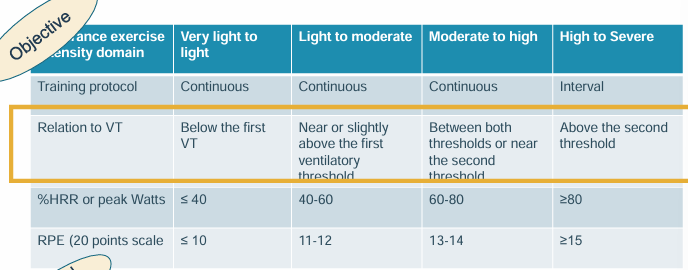
Subjective/Monitoring
- Borg scale
- Intensity level
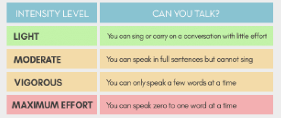
Guidelines - intensity recommendation for healthy
- Moderate (e.g. 40-59% HRR or VO2R) to vigorous (e.g. 60-89% HRR or VO2R) intensity aerobic exercise is recommended for most adults, and light (e.g. 30-39% HRR or VO2R) to moderate intensity aerobic exercise can be beneficial in individuals whoa re deconditioned or older individuals
Frequency
- Number of sessions/week
- Depends on
- goals: health vs fitness
- fitness level: poor vs fair to excellent
- preferences, time constraints
- duration, intensity
- 3 days a week is sufficient to improve but 3-5 days seems optimal
- improvements in cardiorespiratory fitness (CRF) are attenuated with exercise frequencies more than 3d/week and a plateau in improvement with exercise done more than 5d/week
- vigorous intensity exercise performed more than 5d/week might increase the incidence of MSK injury, so this amount of vigorous intensity, physical activity is not recommended for adults who are not well conditioned
Guidelines
- moderate intensity, aerobic exercise done at least 5d/week
- vigorous intensity, aerobic exercise done at least 3d/week
- a weekly combination of 3-5d/week of moderate and vigorous intensity exercise is recommended for most adults to achieve and maintain health/fitness benefits
Duration
- Duration and intensity are inversely related
- Depends on fitness/time constraints, age, etc...
Guidelines
- Most adults should accumulate 30-60 mins/day (>/= 150min/week) of moderate intensity exercise, or a combination of moderate and vigorous intensity exercise daily to attain the recommended targeted volumes of exercise
- This recommended amount of exercise may be accumulated in one continuous exercise session or in bouts of >/= 10 mins over the course of a day
- Durations of exercise less than recommended can be beneficial in some individuals
- Accumulated bouts of 10 mins
- Evidence for VO2max
- Little evidence with regards to other risk factors
- Weekend warrior
- Lower rates of mortality compared to sedentary
- Only in individuals without CV disease
Step 5: Progression
What?
- Physiological changes enable the individual to increase the total work performed.
- Greatest conditioning effect: week 1-8
- +3%/ week first months
- +2% /week in month 2
- +1%/week from month 3 on
- Overload (adjustments in intensity/duration/frequency) is needed for continuous progression
- Age: slower in elderly
- Health status
- Initial fitness level: more in less fit (40 % in sedentary vs 5% in elite)
How?
- Progression should be made during exercise program, in which first duration / frequency of the exercise session should be achieved before increasing the exercise intensity
- When changes in physical fitness occur as a result of training, the VT1 and VT2 should be re-assessed to re-establish a proper exercise intensity, if feasible
- General rule: 5- 10% per week
- Take it slow!
- MONITOR for adverse effects (adjust downward if not well tolerated!)
Overview of stages
Initial stage
- Aim: familiarise client with exercise training
- Start at low intensity - 40% of HRR (build up to 60%)
- Minimum 3 sessions a week
- Build duration first (from 15-30 minutes)
- Avoid muscle discomfort and injury (compliance)
- May last 1-6 weeks
Improvement stage
- May last 4-8 months
- Progression at a more rapid rate than start
- Duration or frequency before intensity
- Increase intensity to 60-85% of HRR
- Increase with +/- 10 minutes/session maximum
- Frequency evolve from 3 to 5 sessions weekly
Maintenance stage
- Helps client preserve level of fitness
- Should continue at regular long-term basis
- Amount to maintain is less than needed to improve
- Review objectives and progress for modification of exercise prescription